Epigenetic Regulation of Gene Expression in the Heart
The Franklin lab is investigating epigenetic regulation of gene expression during the development of heart disease. In the nucleus, DNA is wrapped around histone proteins, forming nucleosomes. This combination of DNA, histones, and other proteins is referred to as chromatin. Both the DNA and proteins in this complex are susceptible to modifications which can alter the chromatin structure and consequently influence the genes which are transcribed. Changes in gene transcription can influence cell fate and physiology and have been shown to be altered in disease, including heart disease. Because more people die from heart disease than any other pathology, the Franklin lab is interested in identifying the specific factors that regulate gene expression in the heart during disease progression. We are specifically interested in understanding the mechanistic basis for how remodeling of chromatin induces the re-expression of fetal genes in the heart during the development of cardiac hypertrophy and failure. To do this, the lab uses a combination of cell and animal models, proteomics, biochemistry, and molecular biology to elucidate the function of histone isoforms, post-translational modifications, and other chromatin-binding proteins on chromatin structure and gene accessibility.

MASS SPECTROMETRY
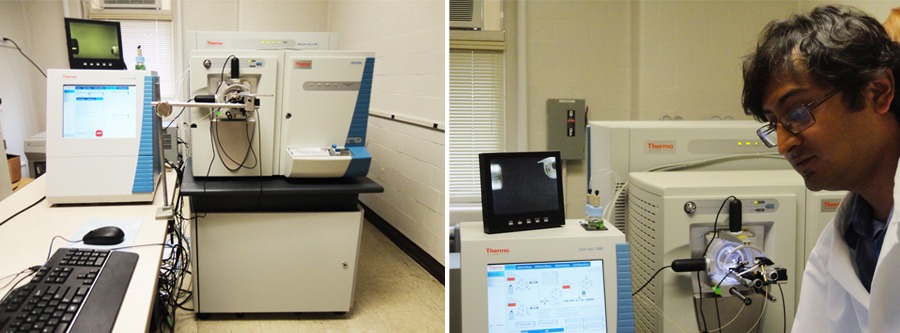
The Franklin lab is equipped with an Orbitrap Velos Pro Mass Spectrometer which allows state-of-the art analysis of proteins and peptides.

Research Areas
Franklin Lab is focused on understanding the epigenetic factors regulating gene expression changes in the heart during the development of pathological hypertrophy and failure. We have utilized quantitative mass spectrometry to identify novel chromatin-binding proteins differentially regulated in a mouse model of pressure-overload hypertrophy and have evaluated the role of these proteins on chromatin structure, gene expression, and cardiac physiology using isolated cell and animal models. This includes two members of the SMYD family of histone methyltransferases, SMYD1 and SMYD5. Parallel studies aim to characterize the contribution of histone variants and post-translational modifications on genomic plasticity with the long-term goal of understanding the mechanistic basis for genomic regulation in cardiac development and disease.
SMYD5 and inflammatory remodeling in heart failure.
SMYD1, mitochondrial energetics and protection from ischemic injury.
Cardiac proteomics and phosphoproteomics in human heart failure.
Cardiac epigenetics: histone PTMs and their regulators in cardiac disease